
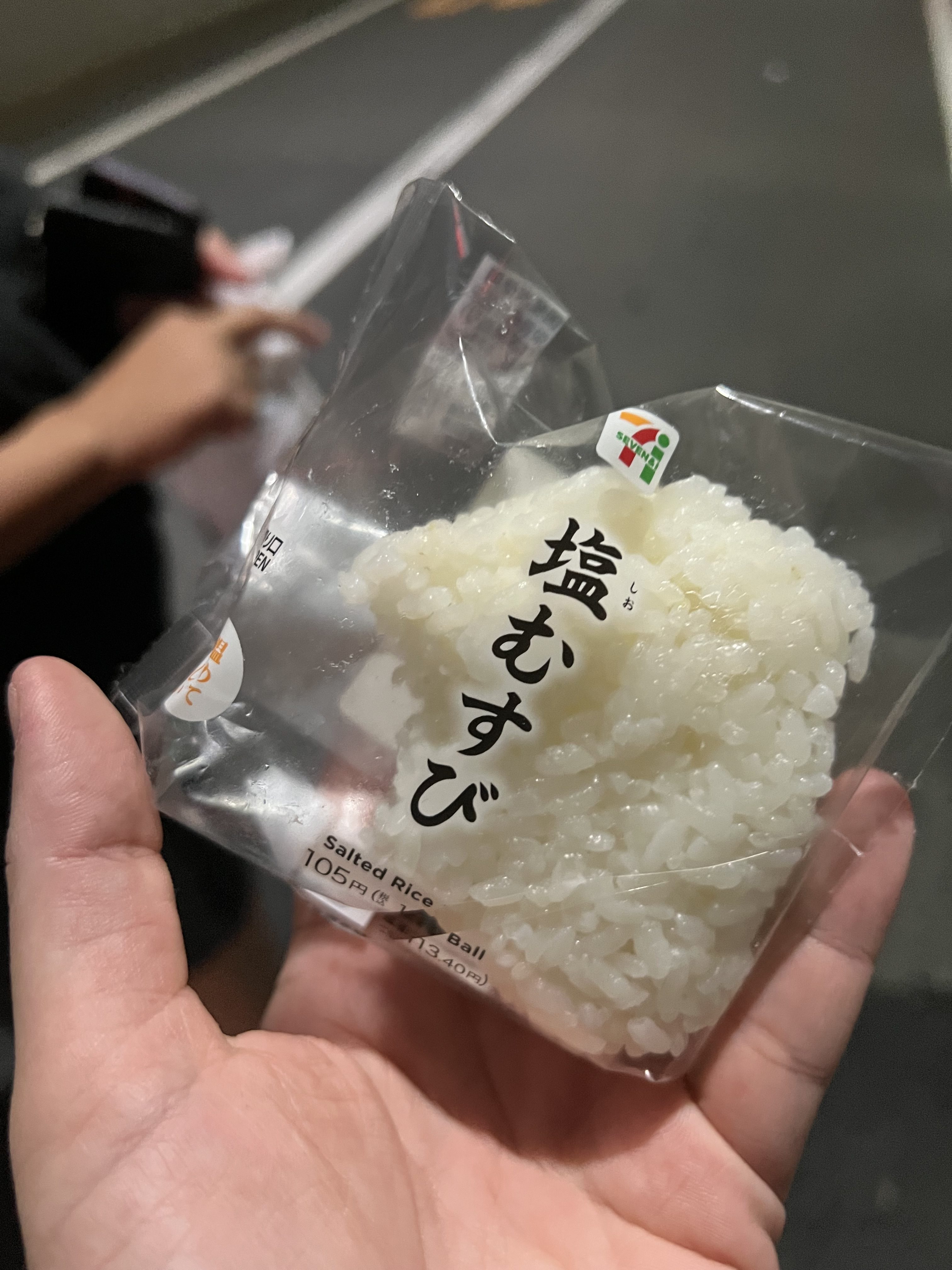
🍙Word of the Week: おにぎり
📌Meaning
お握り(おにぎり) means “rice ball” in Japanese.
It usually refers to a ball or triangle of rice, often wrapped in seaweed and filled with ingredients like salmon, tuna mayo, pickled plum, or kelp.
You’ll see おにぎり everywhere in Japan, especially at convenience stores like 7-Eleven, FamilyMart, and Lawson.
🔊Pronunciation
おにぎり(onigiri)
👉Pronounced: oh-nee-gee-ree
✍️Kanji Breakdown
おにぎり is usually written in hiragana:
But, it can also be written as:
お握り
The kanji is:
- 握= to grip, grasp, or hold
- り= ending that turns the action into a noun
So お握り comes from the idea of rice being gripped or shaped by hand.
👉Basically:
“something shaped by gripping/ holding”
🧠How It’s Used
You can use おにぎり when talking about eating, buying, or making rice balls.
Common patterns:
- おにぎりを食べる → to eat onigiri
- おにぎりを買う → to buy onigiri
- おにぎりを作る → to make onigiri
💭Example Sentence
コンビニでおにぎりを買いました。
(Konbini de onigiri o kaimashita.)
👉”I bought onigiri at the convenience store.”
✨Pro Tip
In Japan, convenience store おにぎり often have different fillings. Some common ones are:
- 鮭(さけ / sake) = salmon
- ツナマヨ (tsuna mayo)= tuna mayo (one of my favorites)
- 梅(うめ / ume) = pickled plum
- 昆布 (こんぶ / konbu) = kelp
If you’re traveling in Japan, おにぎり is one of the easiest and most affordable foods to try.
💡Try It Yourself
How would you say:
👉 “I want to eat Onigiri.”
(Hint: おにぎり+食べたい)👀
Answer:
おにぎりを食べたいです。
onigiri o tabetai desu.
🤍Want to Learn More?
If you’re learning Japanese for travel, food, or real-life conversation, I focus on simple, practical lessons that help you actually use the language..
👉Book a free 15 minute call here to get started.
Leave a Reply